BPD Recovery Plan
BPD is a painful mental health disorder which entails vicious cycles of self sabotage and impulse control, fear and trauma-based behaviors combined with powerful emotional experiences that can lead to consequences which further increase shame, guilt, remorse, embarrassment and self hate (further driving more symptoms).
BPD is therefore, BOTH a “Cause” AND an “Effect” of its own suffering.
Because of this, managing and recovery must have a dynamic approach in order to fully address the roots:
1. Interventions for thoughts, feelings, beliefs and behaviors that cause, result in, lead to symptoms
2. Interventions for environmental factors that may be effected by symptoms, for relapse prevention
3. Processing Grief and Relearning Safety
(It is important to note that there will be some triggers and factors that are out of the individual’s control - just as there will be factors and conditions that are outside of others’s control like those who love them, are in proximity, have to work with, or care providers, etc - and to keep in mind that the BEST any of us can do is work with the factors and conditions that are mostly within our control, respectively.)
A complete treatment plan for BPD needs to address all components of the individual’s suffering AND possible environmental factors that may be contributing to the individual’s quality of life to reduce exposure to triggers (within reasonable control).
Accommodations also need to be made for processing grief, if a history of trauma/abuse which may be contributing to symptoms is present (cPTSD is a common comorbidity with BPD.)
1.) The First Approach: Finding interventions and solutions for BPD symptoms that negatively impact the individual’s life and well-being by addressing symptoms and behaviors within their control, such as:
Thought patterns which lead to:
- [ ] Emotional dysregulation, spiraling
- [ ] Relationship challenges, like distrust
- [ ] Paranoid delusions, leading to psychosis or dissociation
- [ ] Obsessive rumination and dysfunctional thoughts
Behavioral reactivity to thoughts/triggering events:
- [ ] Impulsive decisions, acting on feelings immediately
- [ ] Choices made in anger or during rage episodes
- [ ] Escape or relief from intolerable feelings, such as self harm or addiction
- [ ] Frantic efforts to avoid real or perceived abandonment
Feelings resulting from the outcomes of the aforementioned:
- [ ] Episodic instability due to conditional uncertainties in relationships and other major life areas/domains (like work, school, family, friends, hobbies, goals, etc)
- [ ] Chronic emptiness because the only thing that appears to last is the suffering itself
- [ ] Unprocessed grief manifesting as rage and anger because of it all
- [ ] The desire to permanently leave life to escape suffering
2.) The Second Approach: Finding interventions and solutions for external environmental factors that are contributing to the manifestation of BPD, and controlling triggers or factors that increase the likelihood of symptoms and behaviors, like:
Other People in Regular Proximity:
- [ ] The presence of unknown or frequent exposure to unsafe people (defined through previous experiences with them)
- [ ] Provocation, bullying, harassment, targeted attacks, gossip, slander, online instigation, smear campaigns, triangulation, unfair comparisons
- [ ] Abuse: including verbal, physical, emotional, psychological, financial, sexual
- [ ] Neglect from trusted caregivers or allies
- [ ] Invalidation of the individual’s experience of suffering, thoughts, feelings or attempts for solutions
- [ ] Social groups or organizations that may or may not align with personal values
Specific Places:
- [ ] Forced re-exposure to places or environments where abuse or traumatic events occurred (due to inability to relocate or by other obligations)
- [ ] Dwelling in or frequenting unsafe places/territories where known threats are likely to occur (threats to emotional, mental or physical well-being)
- [ ] Inability to escape or relocate due to finances, obligations, transportation, accessibility, court or law orders
- [ ] Re-entry to environments where addiction occurred that become triggering stimuli for relapse
Things/Tangible Stimuli:
- [ ] Certain scents, sights, sounds or sensory inputs that remind of a painful or traumatic relationship/event, like pictures, songs, movies, food, etc.
- [ ] Exposure to unpleasant and triggering sensory stimuli that is out of the individual’s control: social media feeds, signs on the road, songs at the grocery store, overheard conversations, stumbling upon upsetting reading material, unpleasant synchronicities and “coincidences” (tangible triggers that seem planted or coordinated, inducing paranoia)
- [ ] Overwhelming tasks or obligations that require time, energy or money that exceed what the individual can realistically offer or access at the moment, stress from bills and debts
- [ ] Re-exposure to items or substances that cause harm or addictive behaviors, like smoking, drugs, porn, gambling, etc.
- [ ] Access and exposure to items that were or can be used for self harm and other forms of violence
Society/Cultural Factors:
- [ ] Cultural expectations or social pressures that induce shame and embarrassment for seeking help/reaching out or speaking up (stigma)
- [ ] Societal pressures to look, think, act, and feel a certain way which don’t line up with the individual’s values, experiences or needs (in large or small groups)
- [ ] Harassment, discrimination, prejudice, oppression, and forced silence or compliance due to political, societal, financial, or other cultural beliefs, parameters or narratives
- [ ] Access or opportunity that is controlled by decision-makers and powers-that-be
3.) Addressing cPTSD from past trauma/history of abuse and underlying grief
Symptoms that occur from the individual’s unprocessed grief and/or trauma:
Losses:
Death
Divorce
Loss of a pet
Loss of a job
Loss of an opportunity
Loss of physical ability (due to injury or aging)
Loss of tangible items (like money, due to theft)
Loss of meaningful relationships or friendships
Loss of coping skills or access to what worked before
History of abuse:
Physical
Mental
Emotional
Financial
Psychological
Sexual
Digital/Online Stalking/Cyberbullying
Trauma (unique for every individual, including but not limited to:)
Any shocking or harmful event that appears to be unavoidable or unsolvable
Betrayal
Neglect
Invalidation
Isolation
Deprivation
Poverty
Harassment
Separations/endings
Medical conditions or illnesses
Malpractice or fraud
Victim of crime
Witnessing traumatic events
Pandemics, war, natural disasters
Accidents, injury
Second-hand trauma from a loved one’s trauma or pain
Forced or unexpected changes (big or small)
Sudden exposure to threatening conditions or environments
The experience of any of the aforementioned categories or events in this post
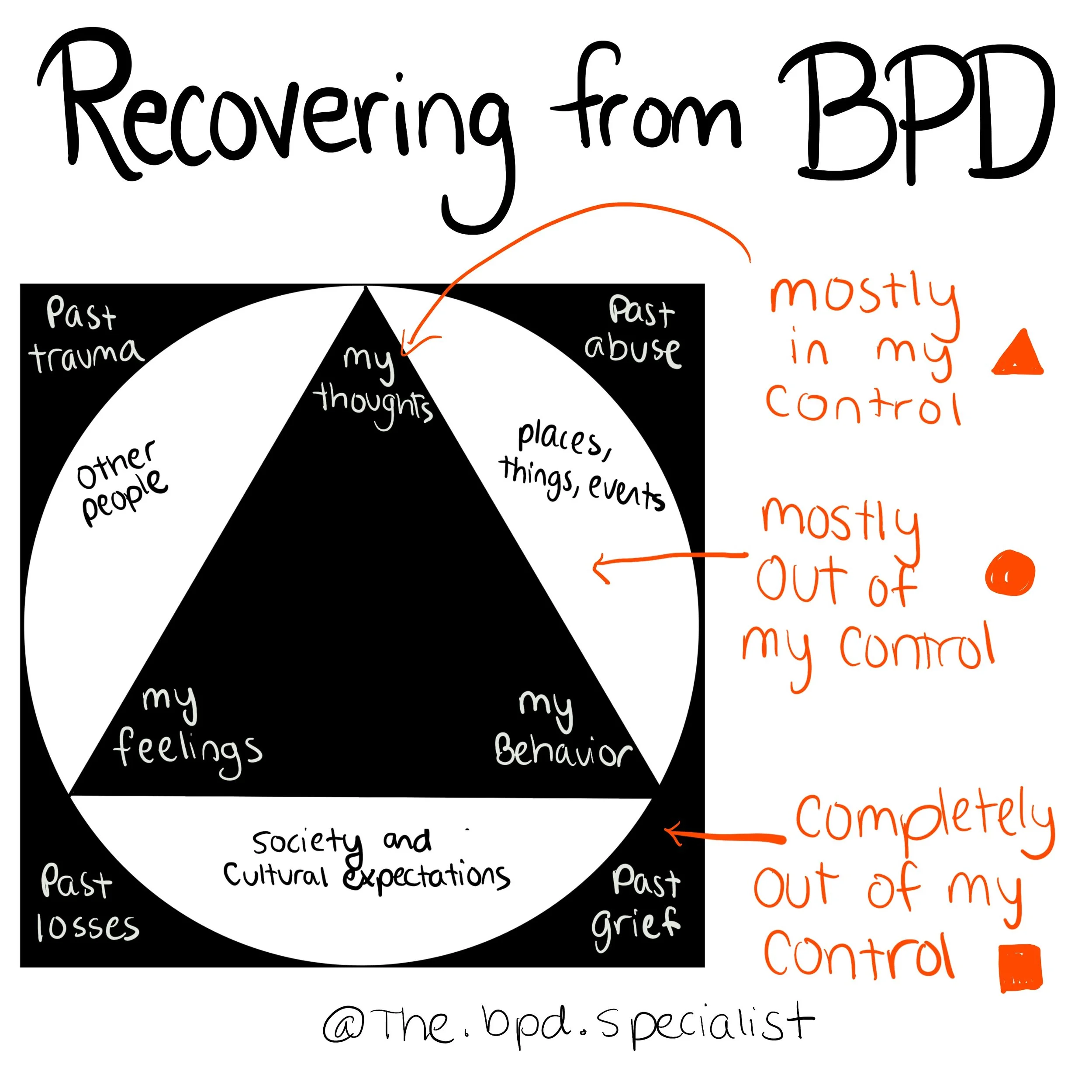
When ranking priority of interventions in BPD recovery, it is most time AND energy efficient to focus on the things that are mostly in your control FIRST, before engaging with factors that are harder to control or change.
Mostly IN your control:
🔹 Your thoughts
🔹 Your feelings
🔹 Your behaviors
(Interventions: First Approach)
Mostly OUT of your control:
🔹 Other people, places, things
🔹 Events, Public environments
🔹 Societal and cultural factors
(Interventions: Second Approach)
COMPLETELY out of your control:
🔹 The past (because it already happened)
🔹 Including past trauma, abuse, or losses that already occurred
(Interventions: Fully process grief safely)